
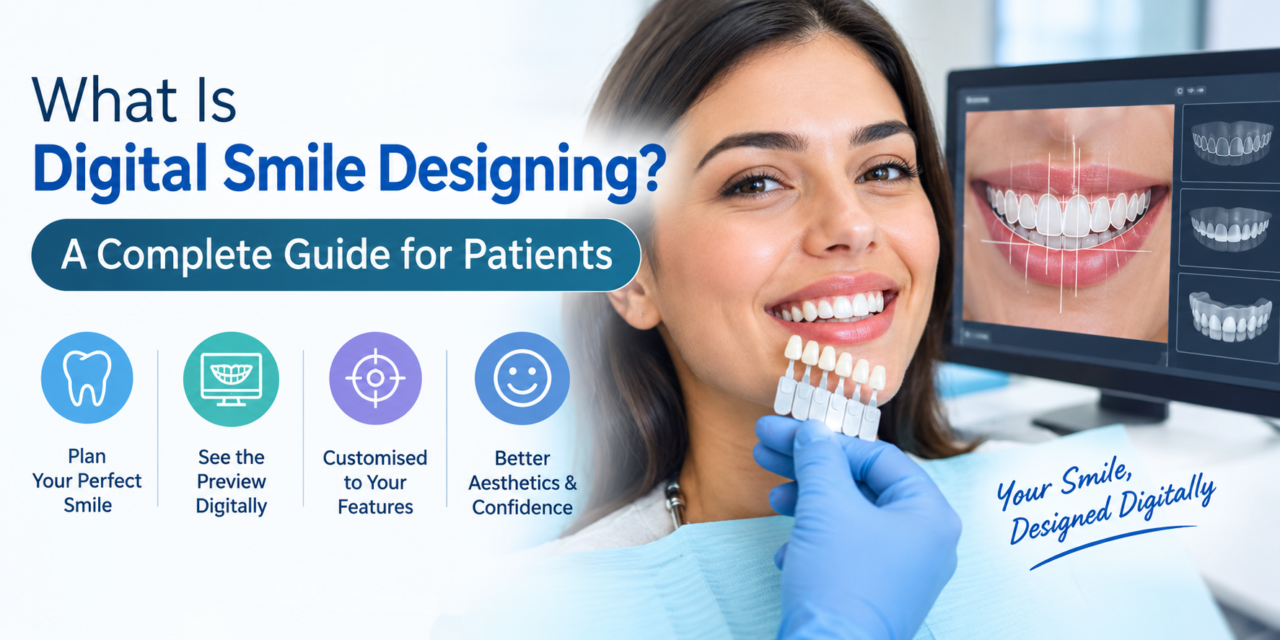
Digital smile designing (DSD) is a computer-based planning method that lets you preview your new smile before any dental work starts. Your dentist takes photos, scans, and video of your face and teeth, then uses specialised software to map out changes in tooth shape, size, and alignment, so you see and approve the design before treatment begins.
That’s the short version. Here’s what actually happens behind the scenes, why patients are asking for it by name now, and how to tell if it’s right for you.
How Does the Process Work?
DSD combines your facial features, photos, and dental measurements into one digital model. Your dentist studies your lip line, facial symmetry, and existing teeth, then builds a virtual mock-up showing how your smile could look after treatment, before a single tooth is touched.
Here’s what goes into building that model:
- Facial analysis – how your smile fits with your lips, gums, and overall face shape
- Photo and video mapping – multiple angles capture how you smile naturally, not a stiff, posed shot
- Digital scanning – a 3D scan replaces the old putty impressions most patients dread
- Software simulation – tools overlay a proposed new smile onto your actual face
The result is a side-by-side comparison: your smile now, and your smile after. Every change is measured and planned first. Nothing is guesswork.
What Does the Design Process Involve, Step by Step?
The process typically runs through five stages, from your first visit to your final result:
- Consultation and photography – detailed photos, videos, and a facial scan are recorded
- Digital design – software maps proposed changes to tooth shape, length, and alignment
- Patient review – you see the mock-up and share feedback before anything is finalised
- Trial smile – some clinics build a temporary version you can wear for a few days
- Treatment – veneers, crowns, whitening, or alignment work begins, guided by the approved design
This sequence puts your input first. Instead of finding out how things turned out afterward, you’re part of the decision at every stage.
What Are the Benefits?
Ask patients why they liked seeing the design first, and most say some version of the same thing: no surprises. You’re not just trusting a description. You’re looking at an actual plan, so there’s less second-guessing once treatment starts.
Here’s what else patients tell us they value:
| Benefit | What It Means for You |
| Visual preview | See the outcome before treatment starts |
| Precise planning | Measurements reduce guesswork mid-procedure |
| Better communication | You and your dentist agree on the goal upfront |
| Fewer revisions | Flaws get caught digitally, not mid-treatment |
| Personalised results | Changes are matched to your face, not a template |
There’s also the natural-look factor. Because we build the plan around your actual face rather than a generic template, results tend to blend in instead of announcing themselves. “Will this look fake?” is one of the questions we hear most often, and grounding the design in your own proportions is exactly how we avoid that.
What Technology Is Involved?
This approach relies on a mix of imaging and planning tools:
- Intraoral 3D scanners, replacing physical impressions
- Facial scanning and video analysis software
- Simulation software that overlays proposed changes onto real photos
- CAD/CAM systems that turn the plan into restorations like veneers or crowns
None of this replaces clinical judgment. The technology is a planning aid. Your dentist’s training still decides what’s achievable and healthy for your teeth and gums.
What Happens During a Consultation?
A consultation usually runs 45–60 minutes. We examine your teeth and gums, take photos and scans, talk through what you’d like to change, and walk you through a preliminary mock-up so you can react to it right there in the chair.
We’ll also ask a few questions along the way: what bothers you about your current smile, whether you’ve had fillings, crowns, or orthodontic work before, any concerns about gum health, spacing, or bite, and roughly what budget and timeline you’re working with.
If your goals go beyond a few cosmetic tweaks, this is also a good time to bring up a full smile makeover in Gurgaon. We’d rather you ask early than wonder halfway through treatment.
Who Is a Good Candidate?
Most adults with healthy gums and stable teeth are reasonable candidates. It’s commonly used ahead of veneers, crowns, whitening, minor alignment corrections, or a broader smile makeover.
It may not be the right starting point if you have active gum disease, untreated cavities, or significant bite problems. Those usually get addressed first. Your dentist will flag this during your exam rather than jumping straight into design work.
Before and After: What to Expect
Results vary by case, but common changes include more even tooth length, a brighter shade, better proportion between teeth and lips, and improved symmetry when you smile. The outcome depends on your starting dental health, the treatments chosen, and how closely the final work follows the approved plan.
Ask to see real patient examples, not just software renderings. The final result depends on execution as much as planning.
How Does This Compare to a Traditional Smile Makeover?
| Factor | Digital Planning | Traditional Approach |
| Planning | Software preview before treatment | Verbal description, limited visualisation |
| Patient input | You review and approve the plan first | Feedback mostly happens after treatment |
| Precision | Measured against your actual face | Relies more on the dentist’s estimation |
| Revisions | Changes made before any drilling | Often requires redoing physical work |
| Time investment | Extra planning session upfront | Fewer preliminary steps |
Really, it’s not a separate treatment from a smile makeover at all. It’s the planning method behind one. If you’re weighing a full transformation, it helps to understand what digital smile designing involves before you walk in for that first appointment.
Frequently Asked Questions
Will my results look exactly like the digital preview?
Close, but not pixel-perfect. The mock-up is a strong guide, not a guarantee, since real teeth and gum tissue respond a little differently than a screen simulation. We use the design to stay as close to the plan as possible, and we’ll flag any adjustments needed along the way.
How long does the planning phase take?
One appointment usually covers it, around 45–60 minutes. What happens after varies a lot: whitening might take a few days, while veneers or a full makeover can stretch over a few weeks.
Does insurance cover it?
Generally, no, since it’s a planning step rather than a treatment on its own. What gets covered depends on the actual work done afterward (implants, crowns, and so on) and your specific policy, so it’s worth a call to your provider to confirm.
Can it fix crooked teeth?
It can account for minor alignment issues alongside veneers or bonding. But if the misalignment is significant, you’ll likely need orthodontic treatment first, and we’ll tell you that upfront rather than design around a problem that needs fixing another way.
Ready to See Your Smile Before You Commit to It?
If you’re on the fence about a smile upgrade, book a consultation. It costs you nothing but time to see what’s realistic for your teeth and face before you decide on anything. We’ll show you the plan, answer your questions, and let you take it from there.
